









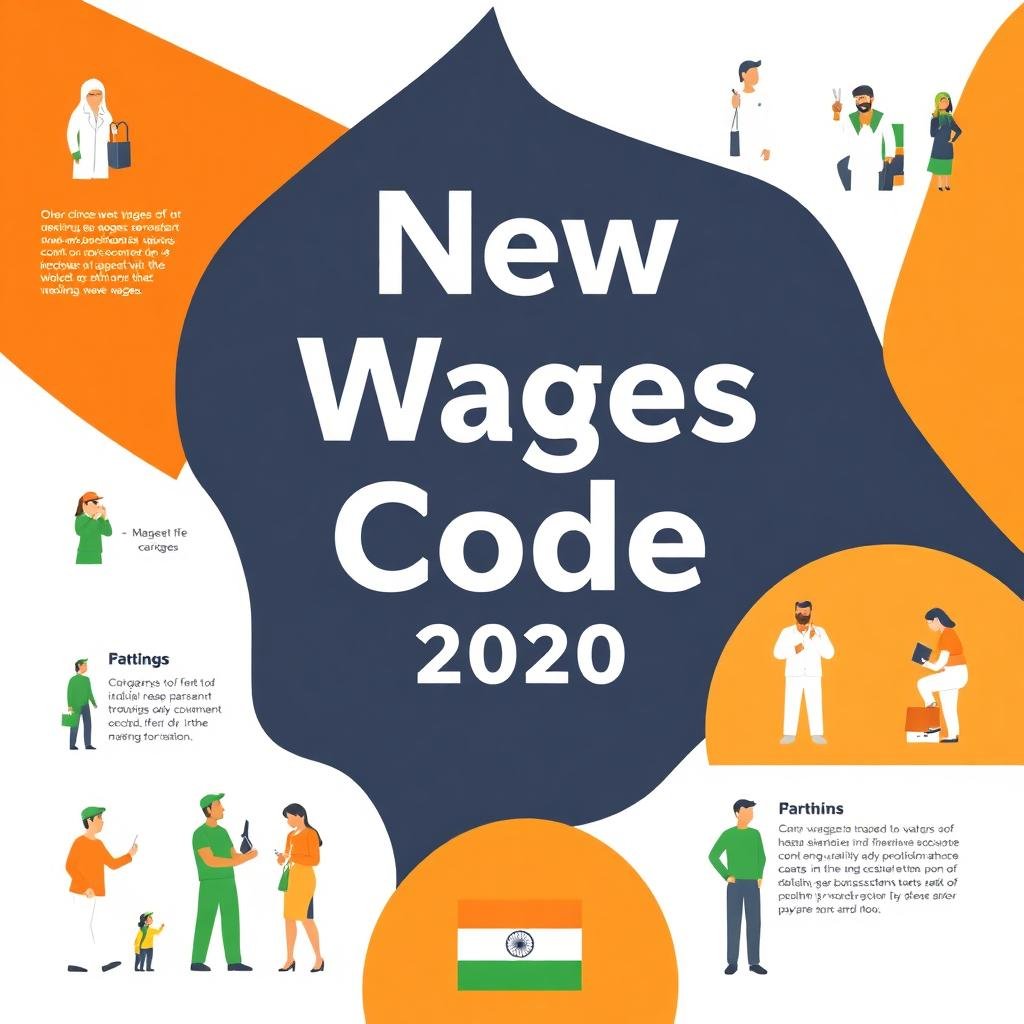
India’s labour law ecosystem is on the brink of its most significant transformation in decades. The Code on Wages, 2019, popularly known as the New Wage Code 2020, is a monumental legislative reform designed to consolidate and rationalize four archaic statutes: The Payment of Wages Act, 1936; The Minimum Wages Act, 1948; The Payment of Bonus Act, 1965; and The Equal Remuneration Act, 1976. This single, unified code promises to redraw the contours of employee remuneration, HR compliance, and payroll management across the nation.
Despite its initial parliamentary passage and the central government finalizing its rules, the full implementation of the New Wage Code remains in a crucial waiting period, contingent upon individual state governments framing and notifying their respective regulations. This article delves deeper into the intricacies, strategic implications, and the anticipated economic ripple effects of this landmark labour reform.
The Core Mandate: Streamlining & Standardizing Indian Wages
The overarching goal of the New Wage Code is two-fold: to simplify India’s notoriously complex labour jurisprudence and to ensure fair and equitable wage practices for all workers. By subsuming disparate laws, it aims to foster greater transparency, reduce bureaucratic hurdles, and enhance the ease of doing business in India for employers, while simultaneously strengthening the social security net and financial well-being of employees.
Decoding the Definitive ‘Wage’ & Its Far-Reaching Impact
Perhaps the most pivotal and widely discussed aspect of the Code is its universal definition of ‘Wages’. This new framework mandates that the sum of an employee’s basic pay, dearness allowance (DA), and retaining allowance must constitute at least 50% of their gross monthly remuneration.
Key Implications for Salary Structure & Benefits:
- PF, Gratuity, and ESI Recalibration: If non-wage components (like HRA, conveyance, special allowances, etc.) exceed 50% of the gross salary, the excess amount will be deemed as part of the wage for the calculation of provident fund (PF), gratuity, employee state insurance (ESI), and even bonus.
- For Employees: This could lead to a noticeable decrease in take-home salary for many, particularly those with high variable pay or allowance components, as statutory deductions (PF, ESI) will increase. However, it simultaneously guarantees significantly higher long-term savings through enhanced PF contributions and more substantial gratuity payouts upon exit, bolstering retirement planning and financial security.
- For Employers: Companies will face an undeniable increase in their statutory compliance costs and overall employer’s wage bill. Re-evaluating existing salary breakups and compensation structures will be paramount. This necessitates a proactive approach to HR policy updates and payroll software modifications to align with the new ‘wage’ definition.
- Bonus Calculations: The new wage definition will also impact bonus calculations, potentially increasing the minimum and maximum bonus amounts payable to eligible employees.
- Future-Proofing Payroll: Organizations must meticulously analyze their current payroll designs and model the financial implications to avoid last-minute disruptions. This is a critical step for payroll transformation in India.
Universal Minimum Wages: A Leap Towards Economic Justice
The Code champions the concept of universal minimum wages, extending its protective umbrella to all employees across all sectors, regardless of employment schedule or salary ceiling. This is a significant departure from the previous regime, which often left workers in the vast unorganized sector vulnerable to exploitation.
- Floor Wage Mechanism: The Central Government will establish a ‘floor wage’ below which no state can fix its own minimum wages. This mechanism aims to eliminate wage disparities across states and ensure a baseline standard of living.
- Sectoral Impact: This provision will particularly benefit workers in agriculture, domestic help, and micro-enterprises, formalizing their employment conditions and ensuring a fairer deal. It’s a key step towards labour formalization and reducing wage inequality.
- Review and Revision: The Code mandates periodic review and revision of minimum wages, ensuring they remain relevant to the cost of living and inflation.
Timely Remuneration and Equality at the Core
- Strict Payment Deadlines: To combat wage delays, the Code stipulates that wages must be paid within seven days of the end of the wage period. For employees who are terminated or resign, all final dues must be settled within two working days. This promotes financial discipline among employers and ensures employee financial stability.
- Equal Pay for Equal Work: The Code emphatically reinforces the principle of equal remuneration for men and women for work of a similar nature. It prohibits gender-based discrimination in recruitment and wage payment, making it a powerful tool for promoting gender equality in the workplace and closing the persistent gender pay gap.
Compliance, Enforcement & Dispute Resolution
The New Wage Code also addresses mechanisms for compliance and dispute resolution:
- Simplified Inspections: It proposes an ‘inspector-cum-facilitator’ model to move away from punitive inspections towards a more advisory and supportive role for compliance officers.
- Digital Record Keeping: The emphasis is likely to shift towards more sophisticated digital record-keeping, enhancing transparency and simplifying audits for statutory compliance.
- Reduced Litigation: By consolidating laws and providing clear definitions, the Code aims to reduce the volume of labour disputes and streamline grievance redressal.
Why the Prolonged Wait? Navigating the Implementation Labyrinth
The repeated deferral of the Code’s full implementation highlights the intricate challenges of federal governance and stakeholder coordination.
- State-Level Autonomy: India’s states have considerable autonomy in enacting their own labour rules. The Centre’s rules provide a template, but each state must deliberate, consult various industry and labour bodies, and then notify its specific regulations. This process is time-consuming, influenced by local socio-economic conditions and political considerations.
- Industry Preparedness: Many businesses, especially SMEs, require significant time to reconfigure their HR systems, payroll software, and financial planning to accommodate the new definitions and higher compliance costs. Industry associations have often requested delays to ensure a smoother transition.
- Economic Headwinds: Factors like the COVID-19 pandemic and subsequent economic recovery have also played a role, with governments being cautious about introducing changes that could further burden businesses during sensitive periods.
Preparing for the Inevitable: A Strategic Imperative
For employers, the waiting period should be utilized for proactive preparation:
- Financial Modeling: Analyze the precise impact on your total cost of employment (TCE), especially factoring in higher PF and gratuity contributions.
- Payroll System Upgrade: Ensure your payroll software and processes can seamlessly handle the new wage definition and calculation methodologies.
- HR Policy Review: Update employee handbooks, offer letters, and compensation policies to reflect the impending changes. Conduct internal communications to prepare employees for potential shifts in their take-home salary.
- Legal Counsel: Engage with legal and HR experts to navigate the transition smoothly and ensure full compliance.
For employees, understanding these changes is crucial for personal financial planning and appreciating the enhanced long-term benefits.
Conclusion: A Transformative Horizon for India’s Workforce
The New Wage Code 2020 represents a watershed moment for Indian labour market dynamics. While its full operationalization remains a phased journey, its eventual implementation will mark a profound shift towards a more standardized, equitable, and transparent wage administration system. It’s not merely a legal amendment but a foundational restructuring poised to significantly impact employee welfare, corporate governance, and the broader Indian economy, solidifying India’s commitment to both industrial growth and social justice. Businesses that strategically prepare now will be best positioned to thrive in this new era of Indian employment regulations.


