









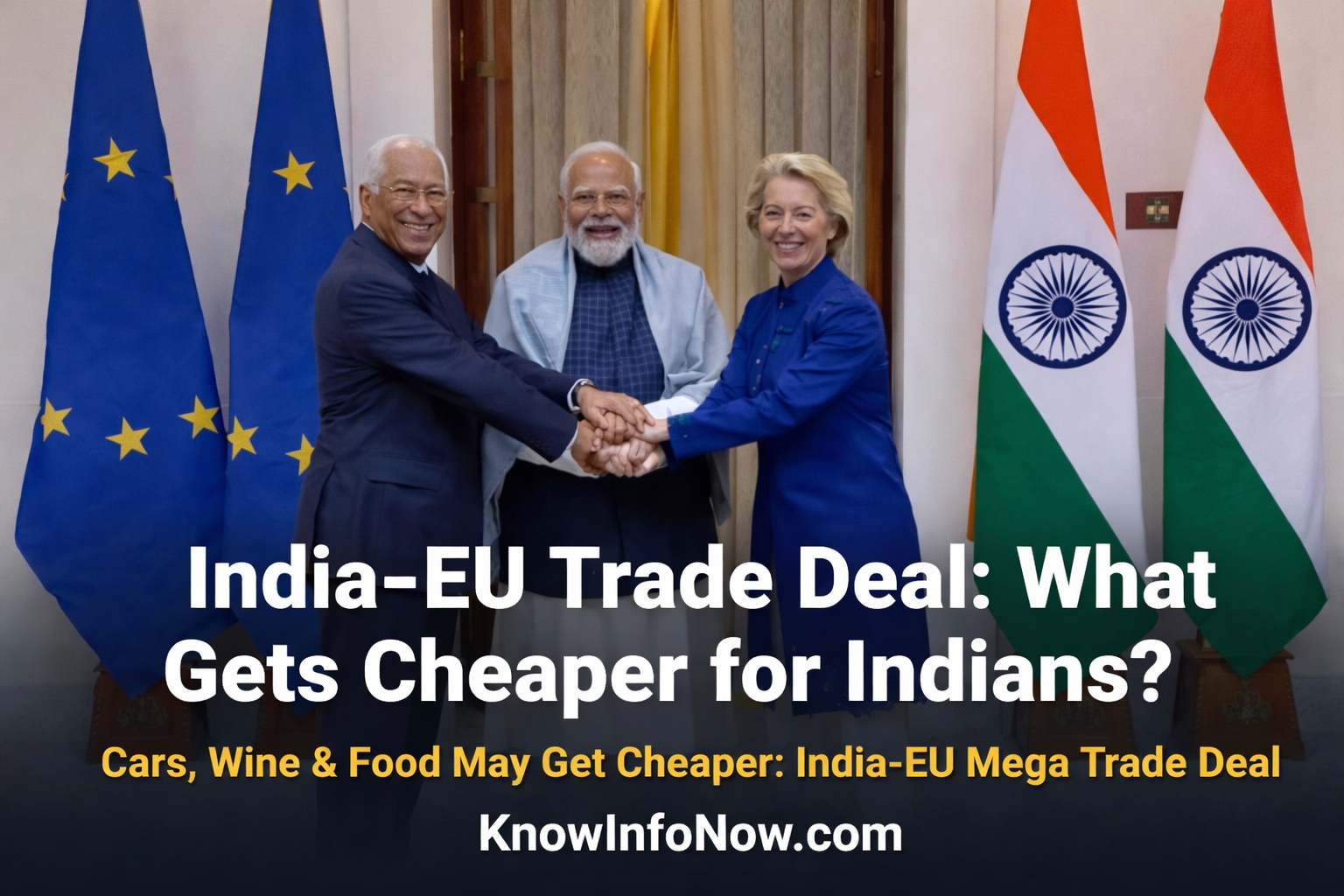
In recent days, a widely shared image and headline have sparked intense discussion across social media and news platforms: India and the European Union announcing what is being called the “mother of all trade deals.”
If the proposed India–EU Free Trade Agreement (FTA) materialises as indicated, it could significantly reshape import prices, consumer choices, and market competition in India.
But what does this actually mean for ordinary Indians?
What products could get cheaper?
And what are the deeper economic implications behind the headlines?
Let’s break it down—clearly, carefully, and without hype.
Understanding the India–EU Trade Deal in Simple Terms
India and the European Union have been negotiating a comprehensive Free Trade Agreement (FTA) for several years. The aim is to:
- Reduce or eliminate import duties
- Increase trade volume
- Improve market access for businesses on both sides
- Strengthen strategic and economic ties
The recent buzz comes from reports suggesting massive tariff reductions on certain European imports into India.
If implemented, this would be one of the most significant trade liberalisation moves India has made in decades.
Key Tariff Reductions Being Discussed
1. Cars: From Luxury to (Relatively) Affordable
- Current import duty: ~110%
- Proposed duty: ~10%
What this means:
European cars—especially premium brands—are currently extremely expensive in India due to high customs duties. A reduction of this magnitude could:
- Lower the landed cost of imported cars dramatically
- Make European electric and hybrid vehicles more competitive
- Increase pressure on domestic manufacturers to improve quality and pricing
⚠️ However, actual showroom prices will still depend on GST, cess, and dealer margins.
2. Wines & Spirits: A Major Price Correction
- Wines: Duty may drop from ~150% to ~20%
- Spirits & beer: Significant duty reductions proposed
Consumer impact:
Imported wines and spirits are currently priced as luxury items in India. If duties fall:
- European wines could become accessible to a much wider audience
- Restaurants and hotels may expand their wine and beverage offerings
- Smuggling and grey-market imports could reduce due to legal affordability
This would be a major shift for India’s food & beverage market.
3. Processed Foods: No More Import Barriers
- Proposed change: Complete elimination of tariffs
What gets cheaper?
- Packaged cheeses
- Chocolates and confectionery
- Ready-to-eat European foods
- Gourmet and specialty items
This could significantly expand choices for Indian consumers while also intensifying competition for Indian processed-food brands.
4. Fruits & Agricultural Imports
Reduced duties on:
- Kiwis
- Pears
Eliminated duties on:
- Fruit juices
- Vegetable oils
This could lead to:
- Lower retail prices for imported fruits
- More variety in supermarkets
- Greater competition in the edible oil segment
At the same time, it raises concerns for domestic farmers if safeguards are not applied.