







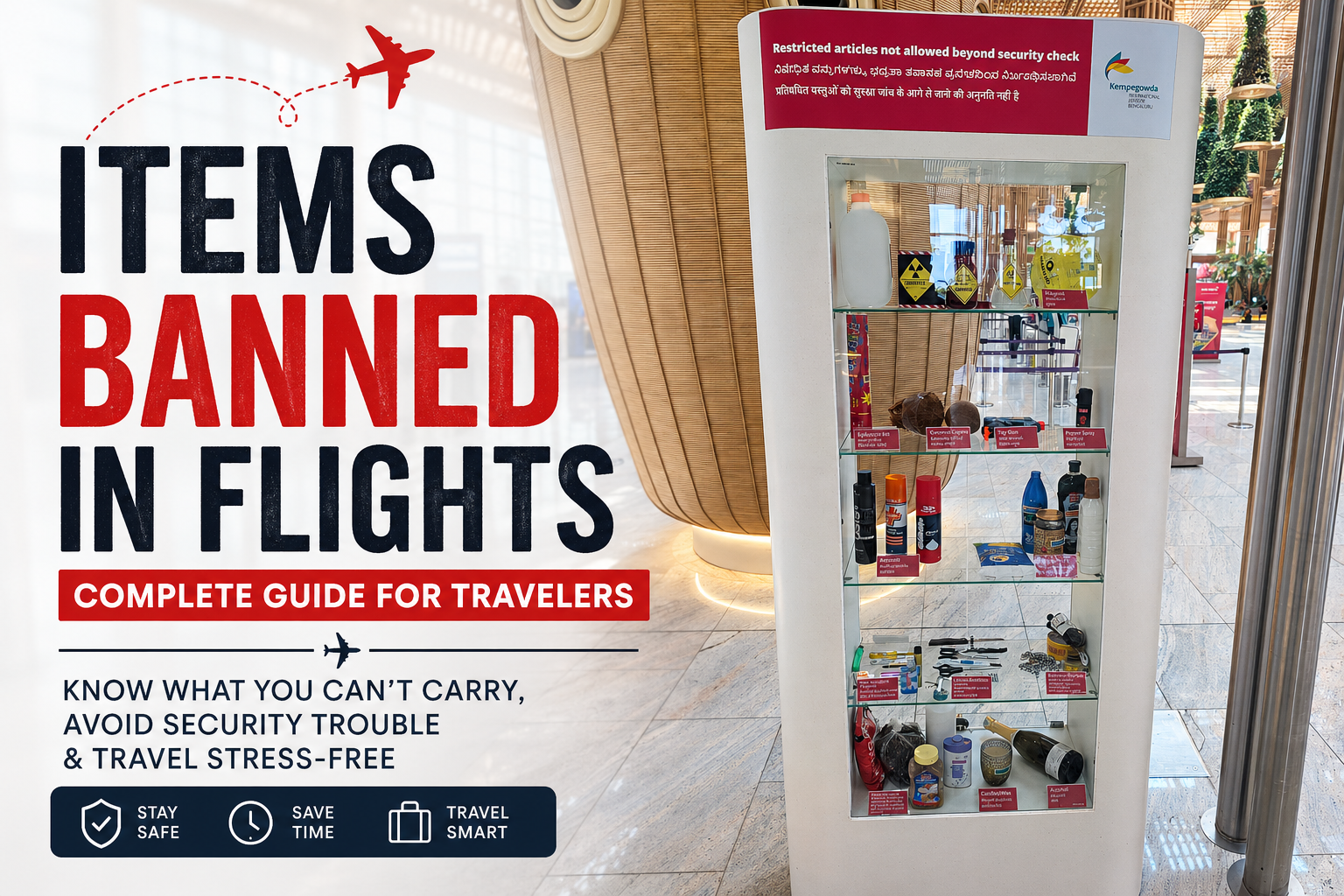
A simple lesson from airport security displays
If you’ve ever noticed a glass cabinet at the airport filled with random items like sprays, tools, toy guns, or even coconuts, it’s not just for show. It’s a real-world reminder of what people tried to carry—and what didn’t make it past security.
Many travelers assume only “dangerous-looking” things are banned. In reality, even everyday items can get stopped.
This guide explains it clearly so you don’t lose your belongings or waste time at the airport.
🚫 The basic rule: If it can harm, leak, explode, or be misused—it won’t pass
Security checks are designed around risk, not convenience. Anything that can:
- Cause injury
- Catch fire
- Burst due to pressure
- Be mistaken as a threat
…will either be restricted or completely banned in cabin baggage.
❌ Items you should never keep in your hand baggage
🔪 Sharp or pointed objects
Even small items can get flagged.
- Knives, blades, scissors
- Metal nail tools
- Any pointed object
👉 These are allowed only in check-in luggage.
🔫 Anything resembling a weapon
It doesn’t have to be real to be stopped.
- Toy guns or replicas
- Pepper spray
- Ammunition or weapon parts
👉 Security treats appearance seriously—if it looks risky, it won’t go through.
💧 Liquids beyond the allowed limit
This is one of the most common mistakes.
- Bottled drinks
- Perfumes, creams, gels
- Homemade food items like chutneys or pickles
👉 Rule: Each container must be 100 ml or less, packed in a transparent pouch.
🔥 Flammable materials
These are a strict no.
- Firecrackers
- Lighter refills
- Fuel or chemicals
- Paint-related liquids
👉 Even a small quantity can lead to confiscation.
🧴 Sprays and pressurized cans
Not all sprays are safe in flight conditions.
- Large deodorants
- Spray paints
- Industrial aerosol cans
👉 Pressure changes at high altitude make these risky.
🔧 Tools and heavy equipment
Anything that can be used forcefully is restricted.
- Screwdrivers, pliers, cutters
- Wrenches or repair tools
- Sports gear like bats
🔋 Battery-related items
Lithium batteries are handled carefully.
- High-capacity power banks
- Damaged or loose batteries
- Devices that can’t be powered off
👉 These can overheat and pose fire risks.
⚠️ Items people don’t expect to be restricted
This is where most travelers get surprised.
- Coconut (can crack under pressure)
- Powdered substances (can trigger screening alerts)
- Thick food pastes (treated as liquids)
- Strong-smelling or leaking food
👉 If it’s not clearly safe, security may stop it.
🧳 What is usually safe to carry
- Mobile phones, laptops
- Dry snacks and packaged food
- Travel-size toiletries
- Important medicines
💡 How to pack smart and avoid last-minute issues
- Keep liquids separate and minimal
- Move doubtful items to check-in baggage
- Avoid carrying anything “just in case”
- Reach airport early to handle unexpected checks
📌 Final note
Most confiscated items are not illegal—they’re just unsafe for air travel. The problem is not what you carry, but where you carry it.
That airport display cabinet tells a simple story:
👉 Many people assume, but few verify.
A quick check before packing can save your time, money, and effort.
